









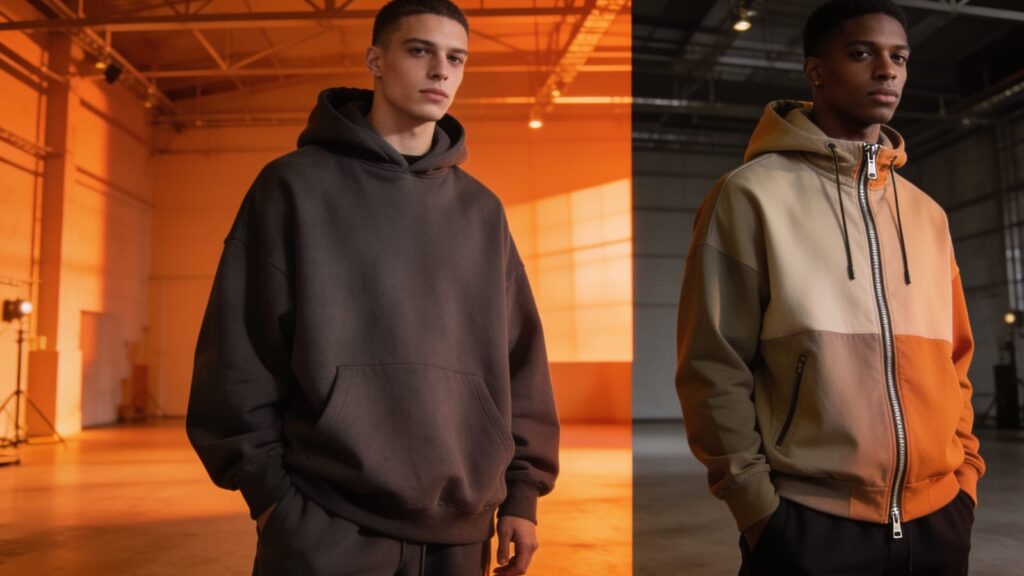
The worn-in, slightly faded, lived-in look is one of the most popular aesthetics in streetwear and premium casual right now. Brands from small Shopify stores to major retailers are using garment washing, acid wash, and vintage-effect finishing to make their hoodies look and feel like they have been worn for years from the moment a customer opens the package.
Getting this right at scale is harder than it looks. The wash process affects the fabric, the colour, the hand feel, and the fit. If you do not understand it before production, you will end up with inconsistent results across your order, unexpected shrinkage, or colours that are darker or lighter than your approved samples.
Here is what you actually need to know about sourcing washed hoodies and acid wash finishes for your brand.
What Is Garment Washing?
Garment washing means the hoodie is washed after it has been fully sewn. This is different from fabric washing, where the raw fabric is treated before cutting and sewing. Garment washing softens the finished product, gives it a broken-in feel, and creates a slightly irregular, natural-looking variation in colour.
There are several types of garment wash used in hoodie production, each producing a different result. The most common are enzyme wash, stone wash, acid wash, and pigment dye wash. Each works differently and requires different factory capability.
Enzyme Wash
Enzyme wash uses biological enzymes to soften the fabric and create a subtle, uniform fading effect. The result is a smooth, soft hand feel and a very natural-looking vintage tone. It is the gentlest wash treatment and works well on 100% cotton and cotton-blend fleece.
If you want your hoodies to feel like they have been worn and washed twenty times without looking overdone, enzyme wash is usually the right choice. It is consistent across a production run and relatively straightforward for most garment wash factories to execute reliably.
Stone Wash
Stone wash uses pumice stones in the wash drum to physically abrade the fabric surface. This creates visible fading at stress points — seams, edges, pockets — which mimics how a garment ages naturally through wear. The result has a slightly rougher texture than enzyme wash and a more pronounced vintage feel.
Stone wash works best on heavyweight cotton fleece hoodies, 380–500 GSM, where the fabric is substantial enough to withstand the abrasion without thinning too much. Lighter fabrics can become too worn or develop holes through the stone wash process.
Acid Wash
Acid wash creates bold, irregular bleached patterns across the fabric. Contrary to what the name suggests, most modern acid wash does not use acid — it uses a combination of bleach and stones to create the characteristic high-contrast, mottled bleaching effect.
Acid wash is the most dramatic and the most difficult to control. Each piece comes out slightly different, which is part of the appeal — no two hoodies are exactly the same. But that variation also means you need a manufacturer with genuine experience in acid wash to keep the results within a range your customers will accept.
The technique works best on mid-to-dark base colours — black, navy, forest green, and burgundy produce the most dramatic contrast. Light base colours do not produce enough visual contrast to make acid wash worthwhile.
Pigment Dye
Pigment dye is a finishing technique where fully sewn hoodies are dyed after construction. The result is a naturally uneven, tone-on-tone colour with slight variation across the garment. Pigment dye produces a very premium-feeling vintage effect — organic and imperfect in the best way.
It is popular in premium streetwear and is increasingly used by contemporary brands to create distinct colour palettes that cannot be replicated with standard fabric dyes. The per-unit cost is higher than standard dyeing, and it requires a manufacturer with dedicated garment dyeing capability.
How to Source Washed Hoodies at Scale
The most important thing to understand is that wash finishing requires a manufacturer with in-house or directly partnered garment wash capability. A factory that subcontracts washing to a third party introduces a quality variable you cannot directly oversee — and in wash finishing, consistency across a bulk order is everything.
When evaluating a manufacturer for washed hoodies, ask these specific questions:
• Do you have in-house garment wash capability or do you subcontract?
• What wash types can you produce — enzyme, stone, acid, pigment dye?
• What is your tolerance for colour variation across a bulk order?
• Can you provide photos of washed samples across a full size run before bulk approval?
• What shrinkage percentage should I account for in my size specifications?
Shrinkage: The Issue Most Brands Miss
Every wash treatment causes some degree of shrinkage in the finished garment. The amount depends on the fabric composition, the wash type, and the wash temperature. This is not a manufacturing defect — it is a predictable part of the process. What matters is that your size specifications account for it.
Before finalising your size chart, your manufacturer should produce a washed pre-production sample in each size. Measure the sample after washing. If there is significant shrinkage, your patterns need to be adjusted before bulk cutting begins. A manufacturer who does not raise this with you before production is a manufacturer to be cautious about.
Why Zega Apparel?
Zega Apparel produces custom washed hoodies including enzyme wash, stone wash, acid wash, and pigment dye finishes for brands across the USA, UK, Canada, and Australia. Our vertically integrated facility handles cutting, sewing, and garment washing under one roof — giving you direct quality control at every stage.
We work from a 200-piece MOQ per colour and produce samples within two to three weeks. Wash samples are produced and approved before any bulk production begins. If you are developing a vintage or washed collection, our team will advise on the right wash type for your fabric, your base colour, and your target aesthetic. Start your washed hoodie project at Zega Apparel
Frequently Asked Questions
Q: What is the difference between acid wash and stone wash hoodies?
Stone wash uses pumice stones to physically abrade the fabric, creating natural fading at seams and stress points. Acid wash uses bleach and stones to create bold, irregular bleached patterns across the garment. Stone wash produces a subtle vintage look; acid wash creates a more dramatic, high-contrast finish with significant colour variation between pieces.
Q: Will hoodies shrink after a garment wash?
Yes — garment washing causes some degree of shrinkage in almost all fabrics. The amount depends on fabric composition, wash type, and temperature. A good manufacturer accounts for this by adjusting patterns before bulk cutting. Always approve a washed pre-production sample in each size before confirming bulk production specifications.
Q: Can you acid wash hoodies with printed logos?
Yes, but the sequence matters. Screen printing and embroidery are typically applied after washing, not before, to avoid the decoration being affected by the bleaching process. Some brands intentionally wash after printing to create a distressed print effect — this should be tested on a sample before committing to bulk production.
Q: What base colours work best for acid wash hoodies?
Darker base colours produce the most dramatic acid wash results. Black, navy, dark green, and burgundy create the high-contrast bleached effect that defines the acid wash look. Light base colours — white, cream, light grey — do not provide enough contrast for the effect to be visible or aesthetically significant.
Q: What is the minimum order for custom washed hoodies?
Most custom washed hoodie manufacturers require a minimum of 100–300 pieces per colour due to the wash setup involved. At Zega Apparel, washed hoodies start from 200 pieces per colour. This covers fabric sourcing, cut and sew, and the garment wash process with full quality control at each stage.

