



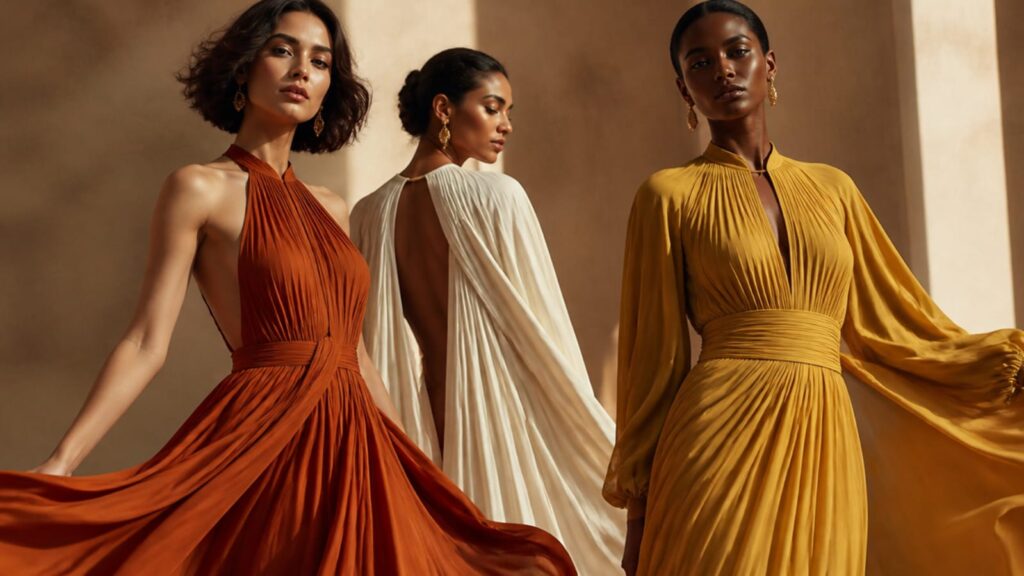
Finding a custom dress manufacturer that actually understands womenswear is harder than it sounds. Dresses require precise grading across a size range that varies more than most other garment categories, fabric choice directly impacts drape and silhouette in ways that can’t be corrected post-production, and the construction detail expectations — particularly in the mid-to-premium market — are unforgiving.
This guide is for womenswear brand founders, boutique buyers, and private label businesses sourcing custom dress production for the first time or switching from a manufacturer that isn’t delivering. We’ll cover how to evaluate a manufacturer before you commit, what the sampling process actually looks like, and which fabric choices will make or break your product.
What to Look For in a Custom Dress Manufacturer
Not all clothing manufacturers are built for dresses. A factory that excels at cut-and-sew T-shirts and hoodies may completely fall apart on a bias-cut midi dress or a structured blazer dress with boning. Here’s what separates manufacturers equipped for quality dress production from those who aren’t.
Womenswear-Specific Pattern Experience
Ask any prospective custom dress manufacturer directly: do they have in-house pattern makers with womenswear experience, or do they rely on client-supplied patterns? A manufacturer with experienced in-house womenswear pattern makers can develop a garment from a sketch, a reference, or a fit brief — and will flag construction problems before they become sampling problems.
A manufacturer without this capability is not necessarily a deal-breaker if you have your own tech packs and patterns. But if you’re relying on them to develop the pattern from a concept or a reference garment, the result from an inexperienced womenswear team will rarely reflect the drape and silhouette you had in mind.
Grading Capability Across Full Size Range
Dress grading is notoriously tricky. The standard grade rules used for men’s separates do not translate cleanly to women’s dresses — particularly across the waist-to-hip ratio, bust-to-waist drop, and shoulder width adjustments that create a flattering silhouette across sizes.
Ask for graded spec sheets or a graded sample set from their previous production runs. If they can’t produce these, they’re either doing mathematical grading without fit testing or working at a volume and quality level below what most womenswear brands need.
Fabric Sourcing Depth
The right custom dress manufacturer for your brand either holds a substantial stock of womenswear-relevant fabrics, has established relationships with fabric mills that do, or can work competently with fabric you supply. Ask specifically about their access to:
• Woven fabrics: viscose, crepe, chiffon, satin, georgette, linen, cotton poplin
• Jersey fabrications for knit dresses: ponte, ribbed jersey, modal jersey, scuba
• Seasonal fabric categories: velvet, broderie anglaise, silk-blend fabrications
A manufacturer that works primarily in jersey knit basics may not have the fabric sourcing relationships or cutting expertise to handle a woven dress category — and the reverse is equally true.
| Red Flag to Watch ForA manufacturer who responds to fabric inquiries with ‘we can source anything you need’ without being able to name specific mill relationships, sample lead times, or minimum yardage requirements is not a manufacturer with established fabric sourcing capability. They’re telling you what you want to hear. Ask for specifics. |
Dress Fabrications: What Works and Why
Viscose and Viscose Blends
Viscose (also sold as rayon) is the fabric most associated with contemporary womenswear dresses at the mid-market price point. It drapes beautifully, photographs well, takes dye evenly, and has a natural, breathable hand feel that synthetic alternatives can’t fully replicate.
The manufacturing challenge with viscose is that it requires experienced cutters — it distorts easily on the bias and shifts under blade pressure. A factory that primarily cuts stable woven fabrics may produce cutting inaccuracies on viscose that appear as inconsistent hemlines or misaligned prints. This is a quality check to request specifically in your sampling approval.
Crepe
Polyester crepe and viscose crepe are the category workhorses for event-ready and occasion wear. Crepe has enough structure to hold a clean silhouette at the neckline and hem, minimal stretch to maintain fit across sizes, and a matte surface that gives a more elevated appearance than standard polyester.
100% polyester crepe is the most commercially accessible fabrication for custom dress manufacturing — widely held by most manufacturers, consistent across dye lots, and durable across multiple wears. At 150–180 GSM, it’s appropriate for most bodycon and A-line dress constructions. Below 130 GSM it tends to pull at seams and show undergarments.
Chiffon and Georgette
These fabrications are for the brands willing to pay for the technical manufacturing expertise required to work with them. Sheer fabrics require French seaming or bound edges, additional lining panels, and extremely precise cutting — all of which increase production time and cost significantly.
Chiffon and georgette dresses typically carry a 20–40% premium over crepe dresses at the same unit volume, simply due to the additional construction time and reject rate. If your retail price point supports it, the payoff is a garment that photographs at a visual quality tier that crepe can’t achieve.
Jersey for Knit Dresses
Ponte, scuba, and ribbed jersey dresses are a separate product category from woven dresses and require manufacturers with knit expertise — which typically means different machinery (circular knit lines vs woven cutting tables), different pressing and finishing techniques, and different fit expectations from the pattern.
Ponte at 280–320 GSM gives a structured knit dress a premium hand feel and excellent shape retention. Scuba is the performance alternative — it holds a silhouette tightly, is more forgiving on fit precision, and has a slight recovery stretch that makes it popular in bodycon categories.
MOQ Guide for Custom Dress Manufacturing
Custom dress manufacturing MOQs depend on fabrication, construction complexity, and whether you’re specifying stock fabric colours or custom dyeing.
• Stock fabric, standard construction (crepe shift dress, jersey bodycon): 200–300 units per style
• Custom-dyed fabric or custom print: 300–500 units per style (limited by fabric mill minimums)
• Complex construction (chiffon, lining, structured bodice, boning): 200–300 units but higher per-unit cost due to sewing time
• Woven dress with custom print: 500+ units to meet print minimum requirements
At 200 units per style, you can access most of the dress fabrication and construction options available in overseas manufacturing at commercially viable per-unit costs. Below 100 units, your realistic options narrow significantly to domestic manufacturers or manufacturers aggregating orders, neither of which delivers the consistency or pricing that a growth-stage brand needs.
The Sampling Process for Custom Dresses
Womenswear sampling takes longer than many brands budget for. A realistic sampling timeline for a new custom dress with a new manufacturer:
• Week 1–2: Tech pack review and query resolution, fabric swatch selection and confirmation
• Week 3–5: Proto sample production (unrefined construction, correct fabric, check silhouette)
• Week 6–7: Proto review, fit comments issued
• Week 8–10: Size set sample or sealed sample (final construction, approved fabric, check grading)
• Week 11: Sealed sample approval and bulk production release
Shortcutting the proto stage — moving directly to a sealed sample without testing the silhouette first — is where most dress sampling mistakes happen. The silhouette must be approved before the manufacturer invests in full finishing; discovering a neckline problem on a sealed, fully finished sample is expensive and demoralising.
| The Size Set RealityMany brands approve fit on a size 10 sample and assume the grade will work across XS–XL. Dress grading rarely works that cleanly. Request a size set that includes at least a size 6 and a size 16 (or your equivalent range ends) before bulk approval. The cost of a three-size sample set — typically $250–$500 extra — is far less than the cost of grading complaints and returns post-launch. |
Working With a Custom Dress Manufacturer Long-Term
The brands that get the most from their manufacturing relationships treat the factory as a partner rather than a vendor. That means sharing your upcoming collection calendar so they can plan fabric and capacity, providing detailed feedback on every sample round rather than vague approval comments, and maintaining a consistent point of contact rather than rotating team members on production communication.
A manufacturer who knows your standards, your fit expectations, and your typical fabrication preferences will produce better work on every subsequent collection — because they’re not starting from zero on your requirements with each order.
About Zega Apparel
Zega Apparel is a full-service custom clothing manufacturer serving fashion brands, boutiques, and private label businesses worldwide. With a minimum order of just 200 pieces per style, Zega supports emerging brands and scaling businesses alike, offering custom cut-and-sew, fabric sourcing, private label production, sampling, and global shipping under one roof. Get a Free Quote!
About the Author
Tom Brady is the weekly publisher of fashion blogs and articles at Zega Apparel. He is devoted to providing readers with fast-paced, well-researched stories — whether a deep-dive blog or an industry analysis piece. What began as an undergraduate hobby of writing about the fashion industry has grown into a top blog and full-time role. His interests are simple: anything that informs, educates, and engages readers about the apparel manufacturing industry and the brands that shape it.
Frequently Asked Questions
Q: How do I find a custom dress manufacturer for my womenswear brand?
A: To find a reliable custom dress manufacturer, look for factories with documented womenswear production experience, in-house pattern making capability, and the ability to provide graded spec sheets from previous production. Request a development sample before committing to bulk, and confirm their fabric sourcing access matches your category — woven dresses require different expertise than jersey knit construction.
Q: What is the minimum order quantity for custom dresses?
A: Custom dress minimum order quantities typically start at 200 units per style for standard fabrications held in stock. Custom-dyed or custom-printed dresses require higher MOQs of 300–500 units due to fabric mill minimums. Complex construction or exclusive fabrications may further increase MOQs. Always confirm whether the quoted MOQ applies per colour or per style.
Q: How much does it cost to manufacture custom dresses?
A: Custom dress manufacturing costs typically range from $12–$32 per unit at 300 units, depending on fabric and construction complexity. A standard polyester crepe shift dress runs $14–$20 per unit, while a fully lined chiffon midi dress costs $22–$32 per unit. Add 12–18% for freight and duties on overseas production to calculate your landed cost.
Q: What fabrics are best for custom dress manufacturing?
A: The most commercially accessible fabrics for custom dress manufacturing are polyester crepe (durable, widely available, good drape), viscose blends (natural feel, excellent drape, requires skilled cutting), and ponte jersey (structured, shape-retaining, great for bodycon and knit dresses). Chiffon and georgette are available but require more technical expertise and carry higher per-unit production costs.
Q: How long does custom dress production take?
A: Custom dress production typically takes 10–16 weeks from tech pack submission to finished goods, plus 3–5 weeks sea freight shipping. This includes 4–6 weeks for sampling and approval, followed by 6–8 weeks bulk production. Air freight reduces transit to 5–10 days. Complex constructions or new fabrications may extend the timeline by 2–3 weeks.

