


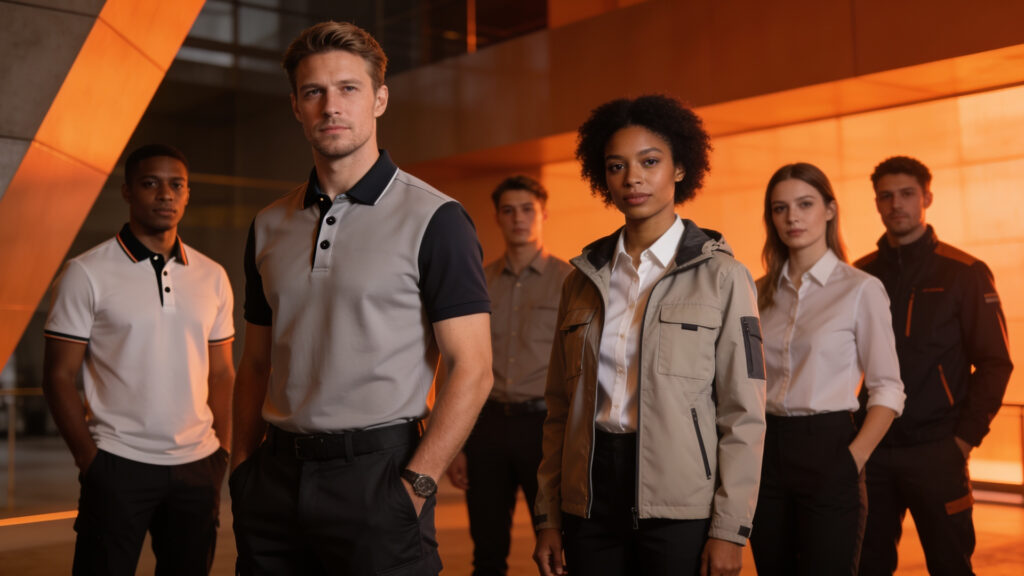
Sourcing corporate uniforms is a different challenge than sourcing a fashion line. You’re not chasing trends you’re solving for durability, consistency across hundreds or thousands of units, repeat reordering over years, and a brand image that needs to look identical whether it’s worn by employee #1 or employee #500. Finding the right corporate uniform manufacturer means prioritizing reliability and consistency over anything else.
This guide covers what businesses need to know when sourcing bulk uniforms — from fabric durability to reorder logistics.
What Makes Uniform Manufacturing Different from Fashion Apparel?
Uniform manufacturing prioritizes consistency, durability, and long-term reorder reliability over seasonal design changes — your uniform needs to look the same in year three as it did on day one. This changes what you should prioritize when choosing a manufacturer.
A fashion brand can tolerate minor variation between production runs because each collection is new anyway. A uniform program can’t. If your company orders 200 polo shirts in March and 150 more in September, both batches need matching color, fit, and logo placement — your employees and customers will notice if they don’t.
Fabric Considerations for Workwear and Uniforms
Durability under repeated washing is the top priority for uniform fabric. Uniforms get washed far more frequently than typical retail apparel — often weekly — so fabric needs to resist shrinkage, color fade, and pilling over hundreds of wash cycles. Cotton-poly blends (typically 65/35) are common in uniform programs specifically because polyester content improves wrinkle and shrink resistance compared to 100% cotton.
Stain and soil resistance matters significantly for food service, healthcare, and industrial uniforms. Treated fabrics with soil-release finishes help garments maintain a clean appearance and last longer in environments with frequent spills or exposure to grease, chemicals, or dirt.
Breathability and comfort for all-day wear can’t be an afterthought — employees wearing the same garment for 8+ hour shifts need fabric that performs across a full workday, not just in a fitting room. Moisture-wicking treated cotton-poly blends are increasingly common for active workwear roles like hospitality, retail, and logistics.
Flame resistance and safety-rated fabrics are mandatory for certain industrial and utility roles. If your uniform program falls under safety regulations (electrical work, certain manufacturing environments), your manufacturer needs documented experience with compliant fabric sourcing — this isn’t a category where you can substitute standard fabric.
Embroidery vs. Screen Printing for Corporate Branding
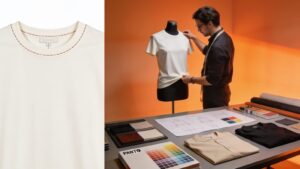
Embroidery is generally the preferred branding method for corporate uniforms because it holds up to frequent industrial washing far better than screen printing, which can crack or fade after repeated wash cycles. For logo placement on chest, sleeve, or collar, embroidery maintains a clean, professional appearance over years of wear.
Screen printing remains viable for uniform programs with lower wash frequency or for larger back-of-garment branding where embroidery would be impractical or excessively costly at scale. The right choice often depends on wash frequency and garment role — a back-office polo washed weekly performs better with embroidery; a one-time event staff shirt may not need that durability investment.
MOQs and Reorder Logistics for Uniform Programs
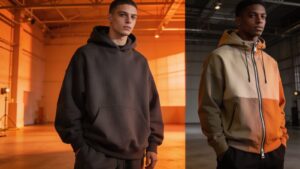
Most corporate uniform programs require ongoing reorders as staff turnover happens, sizes need restocking, or the company grows — this makes manufacturer consistency over time more important than the initial MOQ. Zega Apparel’s standard MOQ across polos, hoodies, and other uniform-suitable garments is 200 units per style, a level designed to fit small-to-mid-sized uniform programs without an unreasonable upfront commitment.
When evaluating a uniform manufacturer, ask specifically about:
• Reorder lead time — how quickly can they fulfill a 20-unit reorder six months after the original 300-unit batch?
• Fabric and dye lot retention — do they keep records or stock to match colors precisely on reorders, or does each batch risk slight color variation?
• Size run flexibility — can they fulfill an unusual size distribution (e.g., mostly XL/2XL) without treating it as a custom request each time?
• Logo file retention — do they retain your embroidery digitized file and screen print setup, or do you pay setup fees again on every reorder?
Manufacturers without organized systems for these details will cost you time and consistency on every reorder, even if their initial bulk pricing looked attractive.
Common Uniform Categories and Manufacturing Considerations
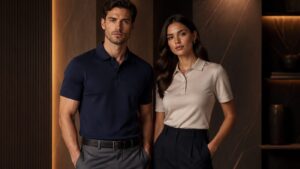
Hospitality and retail uniforms (polos, button-downs) prioritize a professional appearance with moderate durability needs — typically cotton-poly blends with embroidered branding.
Food service uniforms (chef coats, aprons, kitchen polos) require stain-resistant, frequently-washable fabric, often with reinforced stitching at high-stress points.
Healthcare uniforms and scrubs require fabric that withstands frequent industrial laundering at high temperatures, along with colorfastness standards that hold up to bleach-based sanitization.
Industrial and utility workwear may require flame-resistant or high-visibility certified fabric, with construction reinforced for durability in physically demanding roles.
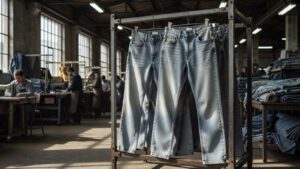
A reliable uniform program depends on a manufacturer who treats consistency as seriously as you do. Zega Apparel handles fabric sourcing, embroidery, and full cut-and-sew production in-house across polos and our full product range, with dye lot and digitized logo file retention built into our process and a standard 200-unit MOQ — so your reorders match your original order, every time. Get a Free Quote today!
Frequently Asked Questions
Q: What fabric is best for corporate uniforms that need frequent washing?
A: Cotton-poly blends, typically 65/35, are the most common choice for uniforms requiring frequent washing because the polyester content improves shrink and wrinkle resistance compared to 100% cotton, while retaining reasonable comfort and breathability.
Q: Is embroidery or screen printing better for uniform branding?
A: Embroidery is generally preferred for uniform branding because it withstands frequent industrial washing far better than screen printing, which can crack or fade over repeated wash cycles. Screen printing remains a viable lower-cost option for less frequently washed uniform items.
Q: How do I ensure uniform reorders match the original color exactly?
A: Ask your manufacturer about their dye lot retention process before your first order. Manufacturers with organized fabric and dye records can match colors precisely on reorders, while those without this system risk slight color variation between batches.
Q: What’s a typical MOQ for corporate uniform orders?
A: MOQs for corporate uniform programs vary by garment type and manufacturer. Zega Apparel operates a standard MOQ of 200 units per style, a common benchmark for vertically integrated manufacturers. The more important factor for ongoing programs is whether the manufacturer can fulfill smaller reorders later without treating each one as a new custom setup.
Q: Do corporate uniforms need special fabric for healthcare or food service roles?
A: Yes. Healthcare uniforms typically require fabric that withstands high-temperature industrial laundering and bleach-based sanitization, while food service uniforms need stain-resistant, frequently washable fabric with reinforced stitching at high-stress points.

