







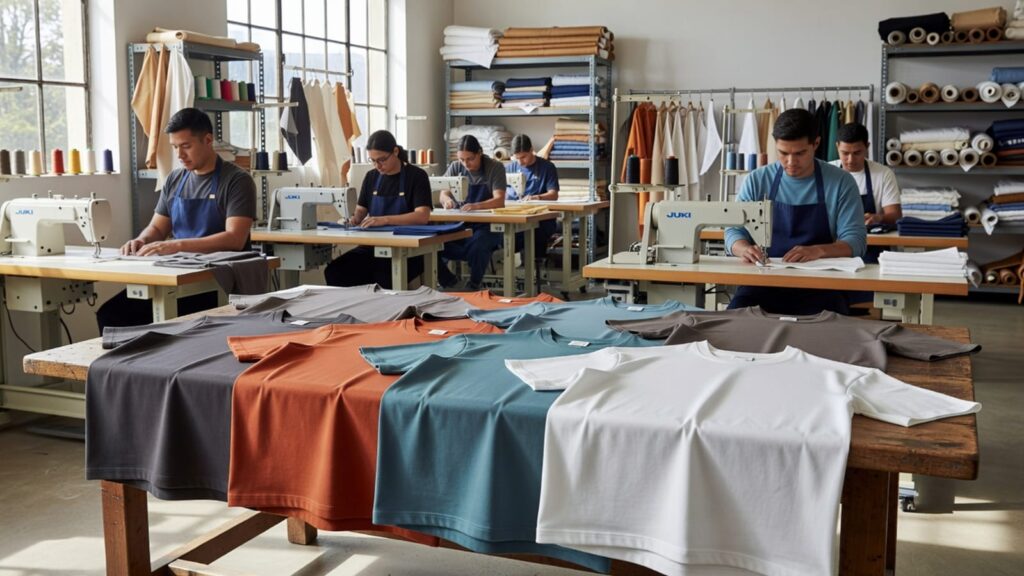
Growing a clothing brand is exciting, but increasing production can create new challenges.
When your orders increase from hundreds of pieces to thousands, you need more than a manufacturer that can produce larger quantities. You need a production process that can maintain fabric quality, measurements, stitching, printing, branding, finishing, and packaging across every batch.
So, how can clothing brands scale production without losing quality?
The answer is to build a repeatable manufacturing process, approve samples before bulk production, maintain clear specifications, use quality checkpoints, and work with a manufacturer that has the capacity and systems to support growth.
For growing brands, scaling should mean producing more garments with the same quality standards, not simply producing more garments.
What Does It Mean to Scale Clothing Production?
Scaling clothing production means increasing your manufacturing volume while keeping your product specifications, quality standards, delivery expectations, and brand requirements consistent.
For example, a clothing brand may start by producing 200 pieces of a hoodie. As demand grows, the brand may need 500, 1,000, or more pieces.
The challenge is making sure that the larger production run still matches the approved product.
A scalable apparel manufacturing process should maintain consistency in:
- Fabric
- Color
- Measurements
- Fit
- Stitching
- Printing
- Embroidery
- Labels
- Packaging
- Finishing
- Quality standards
This is why production planning and quality control become more important as a brand grows.
Why Is Quality Difficult to Maintain When Clothing Production Scales?
Increasing production volume can introduce more opportunities for variation.
A small production run may be easier to monitor closely. Larger orders involve more fabric, more cutting, more sewing, more finishing, and more quality checks.
Common problems can include:
- Different fabric batches
- Measurement variations
- Uneven stitching
- Printing inconsistencies
- Color differences
- Incorrect labels
- Packaging mistakes
- Missed defects
- Production delays
The solution is not to avoid scaling. Instead, brands should create a standardized production system before increasing order volumes.
1. Finalize Your Product Before Increasing Production
One of the biggest mistakes brands make is scaling a product that has not been fully finalized.
Before moving into larger production, confirm:
- Fabric type and composition
- Fabric weight
- Color
- Measurements
- Size grading
- Stitching details
- Print placement
- Embroidery details
- Labels
- Packaging
- Finishing requirements
Your manufacturer should have clear instructions for every important part of the garment.
At Zega Apparel, the production process includes an order summary and approval stage before sampling and bulk production. This helps make sure the manufacturer’s understanding of the product matches the brand’s requirements.
2. Use an Approved Sample as the Production Standard
A sample is not just a preview of your clothing product.
It can become the reference point for bulk production.
Before scaling your order, review the approved sample for:
- Fit
- Measurements
- Fabric feel
- Color
- Stitching
- Print quality
- Embroidery
- Labels
- Overall construction
Once the sample is approved, it should be used as the production reference.
Zega Apparel recommends sampling before bulk production, particularly for first orders. The company creates a sample based on the approved project details and moves into bulk production after approval.
3. Create Clear Production Specifications
Scaling becomes easier when everyone is working from the same information.
A clothing manufacturer should have access to clear specifications covering the garment.
Depending on the product, this may include:
- Technical drawings
- Measurement charts
- Fabric specifications
- Color references
- Stitch specifications
- Print artwork
- Embroidery files
- Label artwork
- Packaging instructions
- Size grading
- Finishing requirements
A clear tech pack or production specification reduces confusion and helps the factory reproduce the product consistently.
If your product changes, update the production information before the next manufacturing run.
4. Keep Fabric Quality Consistent
Fabric is one of the most important factors in clothing quality.
When production increases, brands should pay close attention to whether the fabric used in later production runs matches the approved standard.
Important factors include:
- Fabric composition
- GSM
- Weight
- Stretch
- Texture
- Color
- Shrinkage
- Washing performance
- Durability
A change in fabric can affect the garment’s fit, appearance, comfort, and performance.
This is why fabric inspection and approval should be part of the production process.
Zega Apparel states that its quality process includes incoming fabric inspection, followed by quality checks during production and additional inspection after production.
5. Standardize Measurements and Fit
A garment can look correct but still have measurement problems.
As production volume increases, brands should maintain a consistent measurement standard.
Important measurements can include:
- Chest
- Shoulder
- Body length
- Sleeve length
- Waist
- Hip
- Inseam
- Leg opening
- Neck opening
The exact measurements depend on the garment.
Brands should also define acceptable tolerances and make sure the manufacturer understands them.
Zega Apparel’s quality information states that garments are checked according to the sizes provided, with a stated one-inch tolerance.
6. Build Quality Checks Into Every Production Stage
Quality control should not happen only at the end.
A stronger approach is to use multiple checkpoints.
Before Production
Check:
- Approved sample
- Fabric
- Colors
- Measurements
- Artwork
- Labels
- Production instructions
During Production
Check:
- Cutting
- Stitching
- Measurements
- Printing
- Embroidery
- Construction
- Finishing
After Production
Check:
- Final measurements
- Defects
- Print quality
- Stitching
- Appearance
- Packaging
- Quantity
Zega Apparel describes a multi-point quality control process that includes incoming fabric inspection, in-line production checks, post-production AQL inspection, and final review.
This type of process can help identify problems before finished products are shipped.
7. Increase Production in Controlled Steps
Scaling does not always mean jumping from a small order directly to a very large order.
A controlled approach can make it easier to identify production issues.
For example:
Stage 1: Validate the product
Stage 2: Increase the quantity
Stage 3: Expand successful styles or colors
Stage 4: Increase repeat production
Stage 5: Plan larger production runs
This approach allows a brand to learn from each production cycle.
It can also help the manufacturer understand the brand’s product requirements before larger orders are placed.
8. Work With a Manufacturer That Has Production Capacity
Your manufacturer needs enough capacity to support your growth.
Before increasing order volume, ask:
- What production capacity do you have?
- What products do you specialize in?
- Which processes are handled in-house?
- How do you manage quality during larger orders?
- What is the expected production timeline?
- How do you handle repeat orders?
- How are production updates communicated?
Zega Apparel operates a 50,000-square-foot vertically integrated facility and states that it has served more than 3,000 brands across 30+ countries. I
9. Keep Communication Clear as Orders Grow
Production becomes more complex as order volume increases.
Small changes can create larger problems if they are not communicated clearly.
Before production starts, confirm:
- Quantity
- Size breakdown
- Color breakdown
- Fabric
- Artwork
- Labels
- Packaging
- Delivery requirements
- Approved sample
- Quality standards
Keep important changes documented.
Zega Apparel’s process includes an order summary and approval stage, while its customer process also provides manufacturing updates and images or videos of products during production.
10. Plan Production Earlier
Scaling production requires better planning.
A larger order can require more time for:
- Fabric sourcing
- Color development
- Pattern making
- Sampling
- Printing
- Embroidery
- Cutting
- Sewing
- Quality inspection
- Packaging
- Shipping
Do not wait until inventory is almost sold out before starting your next production cycle.
Instead, monitor your sales and inventory levels and communicate upcoming requirements to your manufacturer early.
Zega Apparel’s published production timeline shows that different sampling activities can have different lead times depending on fabric, decoration, stitching, and product complexity.
11. Do Not Sacrifice Quality for Speed
When orders increase, brands may feel pressure to shorten production timelines.
However, removing important quality checkpoints can create bigger problems later.
A rushed production run can result in:
- Incorrect measurements
- Print problems
- Sewing defects
- Wrong labels
- Packaging errors
- Higher returns
- Customer complaints
A better approach is to improve the production workflow while keeping essential quality checks in place.
The goal should be faster and more organized production—not fewer quality checks.
12. Track Quality Across Every Production Run
Scaling becomes easier when you learn from previous orders.
After each production run, record:
- Defect types
- Defect frequency
- Fabric issues
- Measurement issues
- Customer feedback
- Delivery performance
- Packaging issues
- Production changes
This information can help identify repeated problems.
For example, if a specific measurement is frequently incorrect, the brand and manufacturer can review the specification and production process before the next order.
13. Choose a Vertically Integrated Apparel Manufacturer
A vertically integrated manufacturer can manage more production stages internally.
Depending on the manufacturer, this can include:
- Fabric sourcing
- Pattern development
- Cutting
- Sewing
- Printing
- Embroidery
- Labeling
- Packaging
- Quality control
Managing more stages within one production system can simplify communication and make quality monitoring easier.
Zega Apparel describes its facility as vertically integrated, with services covering areas such as pattern development, sampling, cut-and-sew production, printing, labeling, packaging, and shipping.
Clothing Production Scaling Checklist
Before increasing your apparel production volume, ask:
Product
- Is the design finalized?
- Is the fabric approved?
- Is the size chart confirmed?
- Is the color specification clear?
- Is the approved sample available?
Production
- Is the manufacturer capable of handling the larger order?
- Are production timelines confirmed?
- Are all production instructions documented?
- Are repeat-order specifications available?
Quality
- Is fabric inspected?
- Are measurements checked?
- Are production-stage inspections performed?
- Is the final inspection completed?
- Are quality standards documented?
Logistics
- Is packaging confirmed?
- Is shipping arranged?
- Is the delivery timeline realistic?
- Is there enough inventory planning for the next order?
How Can a Clothing Brand Scale Without Losing Quality?
The simplest answer is to standardize the product before scaling the volume.
Brands should use an approved sample, clear production specifications, consistent materials, defined measurement standards, multiple quality checkpoints, and a manufacturer with enough production capacity.
When these systems are in place, increasing production becomes a controlled manufacturing process rather than simply placing a larger order.
Scale Your Clothing Production With Zega Apparel
Scaling your clothing brand requires more than increasing order quantities. You need a manufacturing process that keeps your product specifications, materials, production standards, and quality consistent as your business grows.
Zega Apparel provides custom apparel manufacturing with a vertically integrated production facility, sampling, quality control, private-label services, custom branding, packaging, and global shipping.
Whether you are increasing an existing product line or preparing for your next large production run, the Zega Apparel team can help you move from product development to bulk manufacturing.
Ready to scale your clothing production? Share your product requirements with Zega Apparel and discuss your next manufacturing project.
FAQs
What does scaling clothing production mean?
Scaling clothing production means increasing the quantity of garments produced while maintaining consistent quality, specifications, fit, materials, and delivery standards.
How can I increase clothing production without reducing quality?
Use an approved sample, clear production specifications, consistent fabrics, measurement standards, in-line quality checks, and final inspection before shipment.
Why is quality control important when scaling apparel production?
Quality control helps identify fabric, measurement, stitching, printing, finishing, and packaging problems before products reach customers.
Should I approve a sample before bulk clothing production?
Yes. A pre-production sample gives the brand an opportunity to review the product before committing to larger production. Zega Apparel recommends sampling before bulk production, particularly for first orders.
How do manufacturers maintain quality during large clothing orders?
Manufacturers can use standardized production specifications, approved samples, material inspections, in-line checks, final inspections, and documented quality standards.
What should I ask a clothing manufacturer before increasing production?
Ask about production capacity, MOQ, lead times, quality control, fabric sourcing, sampling, production tracking, shipping, and how repeat orders are managed.
What is the role of a tech pack in scaling clothing production?
A tech pack gives the manufacturer detailed information about the garment, such as measurements, materials, construction, colors, and design requirements. It helps create a consistent production reference.
Can a small clothing brand scale production?
Yes. A small brand can gradually increase production by validating its products, monitoring demand, improving production planning, and working with a manufacturer that can support increasing order volumes.

