
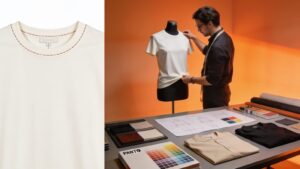
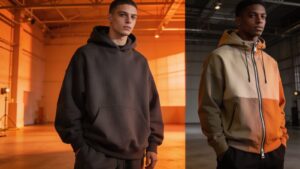




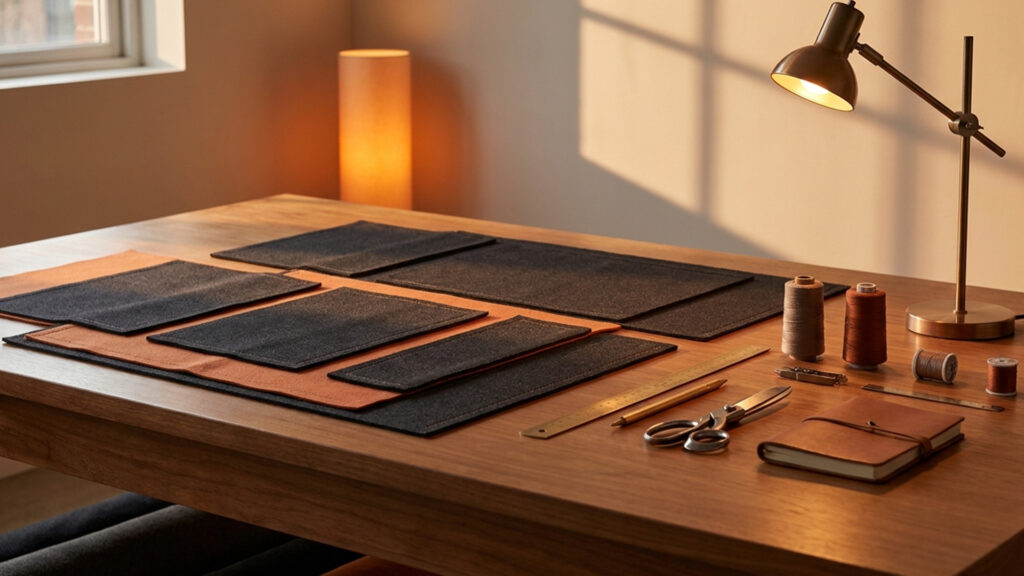
Whether you’re launching your first collection or scaling an existing line, cut and sew manufacturing is the production method that gives brands the most control over fit, fabric, and design. Here’s everything you need to know before placing your first order in 2026.
In 2026, the custom apparel market is more competitive than ever, projected to surpass $4.2 billion globally with a 7.9% CAGR. Brands of all sizes are turning to cut and sew manufacturing to differentiate themselves with truly original garments rather than relying on blank wholesale products with a logo slapped on. But cut and sew is also the most misunderstood production method in the industry, and the brands that get it wrong lose time, money, and market momentum.
This guide cuts through the confusion. Whether you’re a founder planning your debut collection, a growing brand upgrading from print-on-demand, or an established label scaling up for retail, you’ll leave with a clear picture of how cut and sew manufacturing works, what it costs, and what to look for in a manufacturing partner in 2026.
What is cut and sew manufacturing?
Cut and sew manufacturing is the process of producing garments from raw fabric, cutting fabric pieces according to a pattern and sewing them together to create a finished garment. It is the most comprehensive form of custom apparel production, as opposed to screen printing or embroidery on pre-made blanks.
The key distinction: with cut and sew, every element of the garment is built from scratch to your specification. The fabric composition, weight, and finish. The pattern and fit. The construction details seam type, stitching, zipper grade, hardware. The labels, tags, and packaging. Everything is custom. This is why established brands and serious new entrants choose cut and sew, it produces garments that are genuinely proprietary and impossible to replicate from off-the-shelf blanks.
| $4.2B | 7.9% | 200 pcs | 30+ |
| Custom apparel market 2026 | Annual market growth | Zega minimum MOQ | Countries served |
How cut and sew manufacturing works: the full production process
Understanding the production stages helps brands communicate clearly with their manufacturer, set realistic timelines, and avoid the most common mistakes. A professional cut and sew manufacturer will guide you through each stage — but knowing what to expect protects your investment.
| 1 | Design and tech pack developmentYour garment concept is translated into a technical document — a tech pack — that specifies every construction detail: measurements, seam types, fabric specs, colorways, and trim. This is the blueprint your manufacturer works from. Brands with incomplete tech packs face the most delays and revision costs. |
| 2 | Fabric sourcing and swatchingYour manufacturer sources fabric to your specification — composition, weight, finish, and colorway. You’ll typically review and approve swatches before production begins. In 2026, brands increasingly request sustainable fabric options: recycled polyester blends, organic cotton, and bio-based textiles are widely available at competitive pricing. |
| 3 | Pattern making and gradingA pattern maker creates the cut templates for each garment piece based on your tech pack measurements. Grading extends the base pattern across your full size run. This stage determines how well your garment fits across sizes — a critical quality factor that separates premium production from commodity manufacturing. |
| 4 | Sample production and approvalA pre-production sample is made to your exact specifications before bulk production begins. This is your opportunity to evaluate fit, fabric feel, construction quality, and branding details. Never skip sample approval — it is the single most important quality checkpoint in cut and sew manufacturing. |
| 5 | Bulk production — cutting, sewing, finishingWith your sample approved, bulk production begins. Fabric is cut in layered stacks to your pattern templates, then assembled by sewing teams. Finishing includes pressing, trimming threads, and quality inspection of each garment before it moves to the next stage. |
| 6 | Decoration, labeling, and packagingCustom decoration — screen printing, embroidery, sublimation, or laser etching — is applied at this stage. Custom woven labels, hangtags, and packaging are added in-line. Manufacturers with full in-house decoration capability deliver better consistency and faster turnaround than those who outsource these steps. |
| 7 | Quality control and shippingA final AQL (Acceptable Quality Level) inspection checks finished garments against your approved specifications before dispatch. Professional manufacturers provide inspection reports and handle freight documentation for global shipping — including customs paperwork for international orders. |
Cut and sew vs. print-on-demand vs. wholesale blanks
Not every brand needs cut and sew from day one — but every brand building a genuine label will eventually need it. Here is how the three main production approaches compare in 2026.
• Print-on-demand.Zero inventory risk, no MOQ, but zero fabric or fit control. You’re selling a commodity blank with decoration. Works for testing designs; doesn’t build brand equity or support premium pricing.
• Wholesale blanks with decoration.Lower cost than cut and sew, but fabric, fit, and construction are fixed by the blank supplier. Your brand is distinguishable only by your graphic or embroidery — not by the garment itself. Most competitors use the same blanks.
• Cut and sew manufacturing.Highest investment, highest differentiation. Every element is proprietary to your brand. Supports premium retail pricing, wholesale accounts, and long-term brand equity. The production method used by every serious apparel brand at scale.
What does cut and sew manufacturing cost in 2026?
Cut and sew cost depends on four primary factors: garment complexity, fabric selection, order volume, and decoration requirements. There is no single per-unit price — every style is costed individually based on your tech pack specifications.
The most common cost components brands overlook when budgeting for cut and sew manufacturing:
• Sampling fees. Pre-production samples are charged separately from bulk production. Budget for one to three rounds of sampling depending on garment complexity.
• Setup charges. Screen print setup fees, embroidery digitization costs, and pattern making fees are typically charged once per style and amortized across your bulk order volume.
• Labeling and packaging. Custom woven labels, hangtags, poly bags, and packaging add per-unit cost but are essential for retail-ready presentation. Manufacturers who include these in-line reduce your fulfillment overhead.
• Freight and duties.Total landed cost — the actual price per garment delivered to your warehouse — includes international shipping, insurance, and import duties. Always compare manufacturers on total landed cost, not unit price alone.
Volume is the primary lever on per-unit cost. A minimum order of 200 pieces per color delivers meaningfully lower per-unit pricing than a 50-piece test run. Brands that plan their order volumes accurately and commit to production calendars 3–6 months in advance consistently achieve the best cost outcomes.
How to choose a cut and sew manufacturer in 2026
The 2026 apparel manufacturing market has consolidated around manufacturers who offer vertically integrated production — handling every step from fabric sourcing through shipping under one roof. The best manufacturers for cut and sew programs share five characteristics:
• In-house end-to-end capability. Pattern making, cutting, sewing, decoration, labeling, and packaging — all internal, not subcontracted.
• Documented quality management. Pre-production sampling approval, in-line QC checkpoints, and final AQL inspection with written reports.
• Ethical manufacturing certification. Sweatshop-free operation, compliance with international labor standards, and willingness to share compliance documentation. Non-negotiable for brands building retail and wholesale relationships in 2026.
• Dedicated account management. A single point of contact who knows your brand standards, communicates proactively, and manages production milestones — not a generic customer service inbox.
• Proven global shipping experience. Consolidated freight, customs documentation, and multi-location delivery capability for brands distributing internationally.
ABOUT ZEGA APPAREL
| Zega Apparel is a vertically integrated cut and sew manufacturer serving 3,000+ brands across 30+ countries from a 50,000 sq ft production facility in Karachi, Pakistan. From concept and tech pack development through pattern making, sampling, bulk cut and sew production, in-house decoration, custom labeling, packaging, and global freight — every step happens under one roof.Founded with a mission to make premium custom apparel manufacturing accessible to brands of all sizes, Zega operates as a sweatshop-free, ethically certified manufacturer — a trusted production partner for startups launching their first collection and established enterprises managing multi-season programs alike. Minimum order quantity starts at 200 pieces per color and design. |
| Ready to start your cut and sew production with Zega Apparel? Request a production consultation now. |
FREQUENTLY ASKED QUESTIONS
| What is cut and sew manufacturing and how is it different from buying wholesale blanks? |
| Cut and sew manufacturing produces garments from raw fabric — cutting and assembling every piece from scratch according to your custom pattern and specifications. Unlike wholesale blanks (pre-made garments you decorate), cut and sew gives you full control over fabric composition, garment fit, construction details, and branding. Every garment produced is proprietary to your brand. This is the production method used by all serious apparel brands building genuine label equity and supporting premium pricing in 2026. |
| What is the minimum order quantity for cut and sew manufacturing at Zega Apparel? |
| Zega Apparel offers a minimum order quantity of 200 pieces per color and design for cut and sew production — one of the lowest MOQs available from a full-service vertically integrated manufacturer. This low minimum allows emerging brands to validate their designs in the market without committing to large inventory risk, while established brands can use it for limited edition drops or seasonal capsule collections. |
| How long does cut and sew manufacturing take from start to delivery in 2026? |
| A typical cut and sew production cycle at Zega Apparel runs 6–10 weeks from tech pack approval to delivery, depending on garment complexity and order volume. This includes fabric sourcing and approval (1–2 weeks), sample production and client approval (1–2 weeks), bulk production (3–5 weeks), and freight to your destination. Brands that plan production calendars 3–6 months in advance and use blanket purchase orders with phased releases achieve the most consistent lead times without premium rush charges. |
| Do I need a tech pack before starting cut and sew manufacturing? |
| A tech pack is strongly recommended before starting cut and sew production — it is the technical blueprint your manufacturer needs to produce your garment accurately. However, Zega Apparel can assist brands who don’t yet have a completed tech pack. Our production team works with brands from concept stage, helping develop specifications, choose fabrics, and create the documentation needed to begin sampling. Starting without a tech pack typically adds 1–2 weeks to the pre-production phase and may increase sampling revision rounds. |
| What decoration methods are available for cut and sew garments at Zega Apparel? |
| Zega Apparel offers a full range of in-house decoration for cut and sew garments including up to 12-color screen printing, 3D embroidery, sublimation printing, heat transfer, and custom laser etching. All decoration is applied in-line during production — not outsourced — ensuring consistent placement and quality across every unit. Custom woven labels, heat-pasted labels, hangtags, and branded packaging are also available in-line, delivering fully retail-ready garments from a single production run. |
| Can Zega Apparel produce sustainable and eco-friendly cut and sew garments in 2026? |
| Yes. Zega Apparel sources sustainable fabric options for cut and sew production including organic cotton, recycled polyester blends, bamboo-based fabrics, and other eco-certified materials. Brands with sustainability requirements — including those building toward GOTS or OEKO-TEX compliance — can specify eco-certified fabrics at the tech pack stage. Zega Apparel operates as a sweatshop-free manufacturer with documented ethical labor practices, making us a compliant production partner for brands with ESG reporting requirements or retail sustainability standards in 2026. |
ABOUT THE AUTHOR
| Tom Brady Fashion & Apparel Industry Writer · Tom Brady is the weekly publisher of fashion blogs and articles at Zega Apparel. He is devoted to providing readers with fast-paced, well-researched stories — whether a deep-dive blog or an industry analysis piece. What began as an undergraduate hobby of writing about the fashion industry has grown into a top blog and full-time role. His interests are simple: anything that informs, educates, and engages readers about the apparel manufacturing industry and the brands that shape it. |

