



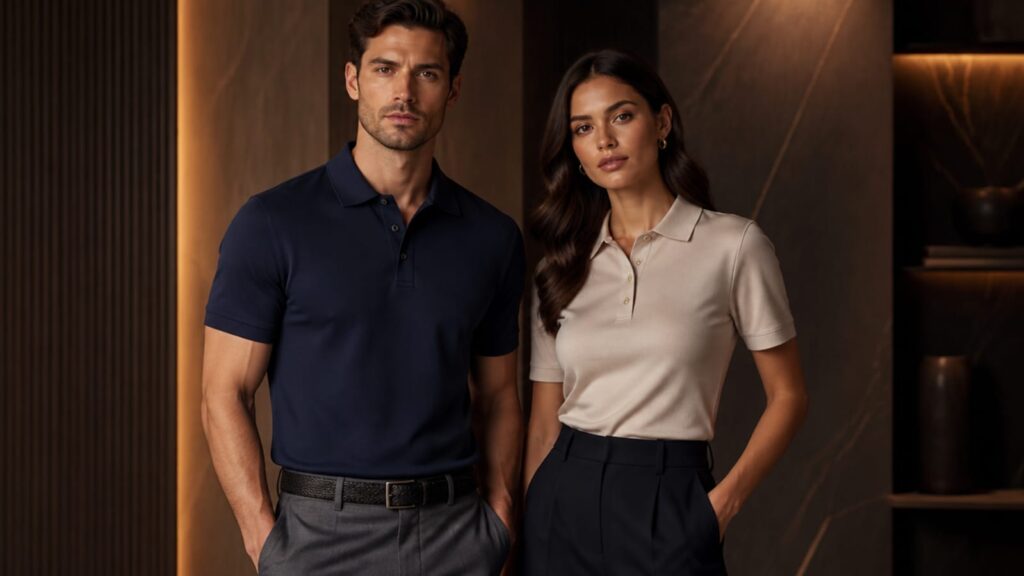
Polo shirts look simple on a hanger, but they’re one of the more technically demanding garments to manufacture well. A misaligned collar, an inconsistent placket, or the wrong knit fabric will make an otherwise good design look cheap. Finding the right custom polo shirt manufacturer means understanding what separates a well-constructed polo from a forgettable one — before you place your order.
This guide covers fabric choice, construction details, MOQs, and what to check before committing to a manufacturer for your polo shirt line.
What Makes Polo Shirt Manufacturing Different from T-Shirts?
Polo shirts require more construction steps than a standard t-shirt: a structured collar, a buttoned placket, and typically a knit fabric (pique or jersey) rather than a simple single-layer cotton. Each of these adds a quality checkpoint where construction can go wrong if your manufacturer isn’t experienced with the garment type.
The collar is the single biggest differentiator between a premium polo and a budget one. A well-constructed collar holds its shape after multiple washes; a poorly interfaced collar curls or loses structure within a few wears. If you’re vetting manufacturers, ask specifically about their collar interfacing process — this single detail tells you more about their construction quality than almost anything else.
Fabric Options for Custom Polo Shirts
Pique cotton is the traditional polo fabric — a textured knit with small raised ridges that gives polos their classic look and breathability. Pique typically runs 180–220 GSM for standard weight, offering structure without excessive heaviness. Manufacturers with in-house fabric sourcing capability can usually offer more GSM and blend options than those relying on third-party fabric suppliers.
Jersey knit is smoother and lighter than pique, often used for a more modern, fitted polo silhouette. Jersey polos drape closer to the body and work well for brands targeting a slimmer, more contemporary aesthetic.
Performance/technical pique blends cotton with polyester or uses 100% moisture-wicking polyester, common for golf and corporate athletic polos. These fabrics prioritize breathability and quick-dry performance over the natural feel of cotton pique.
Cotton-poly blends (typically 65/35 or 60/40 cotton-to-poly) balance the comfort of cotton with the durability and wrinkle resistance of polyester — a common choice for corporate uniform programs that need garments to withstand frequent washing.
Construction Details That Determine Quality
Beyond fabric, several construction elements separate a well-made polo from a poorly made one:
• Placket construction: A clean, reinforced placket with properly set buttons (typically 2–3 buttons) shouldn’t pucker or gap when worn
• Side vents: Small side slits at the hem allow better movement and a cleaner drape — a detail budget manufacturers often skip
• Rib-knit cuffs: The sleeve cuffs should have enough rib-knit stretch to retain shape without sagging after repeated wear
• Collar-to-body color matching: For two-tone or contrast-collar polos, dye lot consistency between fabric panels matters — mismatched dye lots are a common quality complaint with inexperienced manufacturers
MOQs for Custom Polo Shirts
MOQs for custom polo manufacturing typically run higher than basic t-shirts because of the additional components involved — collars, plackets, and buttons all need to be sourced and prepped before cutting begins. Zega Apparel’s standard MOQ across most product categories, including polo shirts, is 200 units per style/color combination, though this can vary slightly with fabric and trim complexity.
If you’re ordering multiple colors of the same polo style, ask whether your manufacturer’s MOQ applies per color or across the full style this affects your total minimum investment significantly.
Decoration Methods for Polo Shirts
Embroidery is the most common decoration method for polos, particularly for corporate and golf-branded programs, because it holds up well on knit fabric and projects a more premium look than print on this garment type. Embroidery on the chest typically runs 5,000–8,000 stitches for a standard logo, with cost scaling by stitch count.
Screen printing is used less often on polos due to the textured pique surface, which doesn’t hold fine print detail as cleanly as a flat-knit t-shirt. If print is required, heat transfer or direct-to-garment methods on jersey-knit polos tend to produce cleaner results than screen printing on pique.
What to Ask a Polo Shirt Manufacturer Before Ordering
• What pique/jersey GSM options do you offer, and can I get fabric swatches before committing?
• How do you interface and construct the collar — and can I see a sample before bulk production?
• What’s your MOQ per color, and does it change for multi-color orders of the same style?
• Do you offer embroidery in-house, or is it outsourced to a third party?
• What’s your dye-lot consistency process for contrast-collar or multi-panel color designs?
A well-made polo comes down to construction details most buyers never think to ask about until something goes wrong. Zega Apparel manufactures custom polo shirts with in-house embroidery, fabric sourcing, and full cut-and-sew production under one roof, at a standard 200-unit MOQ — so collar quality and color consistency are controlled at every stage. Explore our full product range & start your polo shirt line.
Frequently Asked Questions
Q: What fabric is best for custom polo shirts?
A: Pique cotton (180–220 GSM) is the traditional choice for classic-style polos, offering structure and breathability. Performance blends with moisture-wicking polyester are better suited for golf or athletic-branded polos requiring quick-dry properties.
Q: What is a typical MOQ for custom polo shirts?
A: MOQs for custom polo shirts typically run higher than basic t-shirts due to additional components like collars and buttons. Zega Apparel offers a standard MOQ of 200 units per style and color combination, a common benchmark among vertically integrated manufacturers.
Q: Is embroidery or screen printing better for polo shirts?
A: Embroidery is generally preferred for polo shirts because it holds up well on textured pique fabric and gives a more premium, corporate-appropriate finish. Screen printing is less common on polos since pique’s texture doesn’t hold fine print detail as cleanly as flat-knit fabrics.
Q: How do I know if a polo shirt manufacturer has good collar construction?
A: Ask to see a sample or photos of their collar interfacing process and request a wash-test sample if possible. A well-constructed collar should hold its shape after multiple washes rather than curling or losing structure — this is the clearest indicator of construction quality.
Q: What’s the difference between pique and jersey polo fabric?
A: Pique is a textured knit with raised ridges, giving polos their classic structured look and breathability. Jersey is a smoother, lighter knit that drapes closer to the body, often used for a more modern, fitted polo silhouette.

