
10 Best 80s Fashion Trends for Men That Are Still in Demand
80s fashion for men is having a full comeback — and not just in vintage shops. Bold patterns, oversized silhouettes, power dressing, and statement shirts that defined the decade have been showing up on runways, in streetwear drops, and in everyday wardrobes for the past few years.
Whether you are looking to understand 1980s mens fashion from a style history perspective, recreate specific looks from the decade, or find genuine inspiration for your clothing brand or personal wardrobe — this is the complete guide. We cover every major trend, the fabrics and colours that defined the era, the shirts that were most popular in the 80s, the power dressing style that made the decade famous, and how to bring any of it into today.
Overview of 80s Fashion
In the 80s, clothing was not about looking good by someone else’s definition. It was about self-expression. Every element of 80s mens fashion — from the silhouette to the colour choice to the accessories — carried meaning. It was a way for men to show their personality, uniqueness, and individuality through what they wore.
Styles like ripped jeans, loose jackets, and wide-leg denim are the core elements of that era that are still popular today. Brands like Ralph Lauren played a significant role in shaping the 1980s fashion identity and are still referenced when discussing the decade’s defining looks.
Key characteristics of 80s men’s fashion
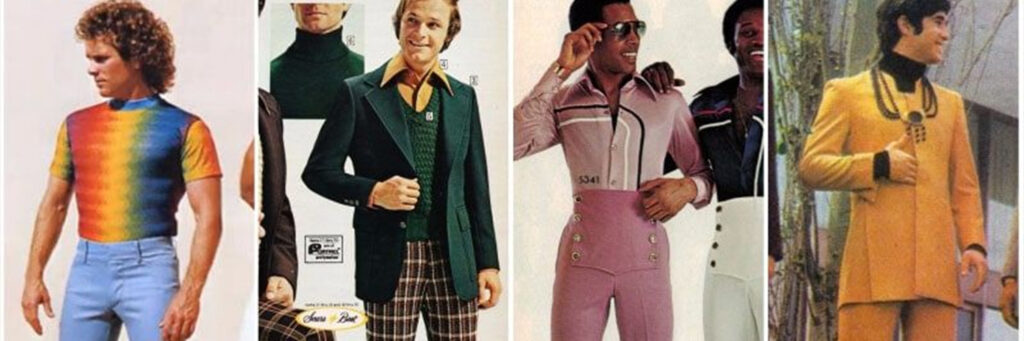
Bold colours: Men in the 80s were not restricted by colour. Electric blues, bright reds, neon pinks, and bold greens were worn confidently as a form of self-expression.
Oversized silhouettes: The baggy fashion we see today originates directly from the 1980s. Oversized blazers, wide jeans, padded jackets, and loose sweatshirts were central to the era’s aesthetic.
100% Denim: Denim was everywhere in the 80s — jackets, jeans, and even shirts. Acid-washed and stone-washed denim in particular became iconic finishing techniques of the decade.
Mix and match: Combining patterns with textures was introduced in the 80s as a deliberate styling experiment — and it has never really left.
Accessories: Watches, belts, and layered jewellery were essential to completing the 80s look. No outfit was considered finished without them.
The Best 80s Fashion Trends for Men
Here are the 12 most defining fashion trends from the 1980s — covering everything from everyday street style to formal power dressing to the decade’s most iconic shirt styles.
1. Power Dressing — Bold Colours, Shoulder Pads and Suits
Power dressing defined the formal and semi-formal face of 80s menswear. Big hair, bold-coloured suits, oversized silhouettes, and prominent shoulder pads were the calling cards of the look. Everyone from office workers to artists like David Bowie completed their look with some version of power dressing.
Brands like Armani and Gucci played a central role in bringing power dressing into the mainstream. Neon and electric tones — shocking blue, vivid red, lime green — were paired with structured suits and blazers. It was bold, confident, and deliberate. See the dedicated section below for a full breakdown of 1980s power dressing.
2. Baggy Jumpers
Oversized knitwear and baggy jumpers were a staple of casual 80s mens fashion. Made in bold, vibrant colours, the look was simple — pull it on and go. The baggy or oversized silhouette has returned to the fashion industry in a big way and can be found today in custom hoodies, oversized tees, and fleece-lined sweatshirts. You can add custom prints to oversized jackets, t-shirts, or hoodies to make the look distinctly your own.
3. Bomber Jackets
The bomber jacket’s roots in 80s fashion are impossible to ignore. Tom Cruise’s Air Force bomber in Top Gun became one of the decade’s most-copied looks. The letterman jacket also emerged as a parallel icon. Both styles remain commercially strong today and are a staple request among clothing brands sourcing custom jacket manufacturing.
4. Preppy Look — Polo Shirts, Khakis and Boat Shoes
Polo shirts with popped collars, khaki trousers, and boat shoes were the 80s preppy look — casual but considered. Inspired by Ivy League culture, the preppy aesthetic used light blues, mint greens, and soft pinks. It crossed easily from casual wear to smart-casual occasions when layered with cashmere or silk.
5. Double Denim
Double denim — denim jacket over denim jeans, usually in different washes — was one of the most recognisable 80s outfit combinations for men. Acid-wash jeans paired with a stone-wash jacket was the ultimate expression of the look. It remains a recurring trend in menswear today and translates well into custom denim manufacturing for clothing brands.
6. Hawaiian Shirts
Hawaiian shirts had a significant moment in 80s mens fashion. Tom Selleck wearing one in Magnum P.I. became one of the decade’s most referenced looks. The combination of soft fabrics, unique prints, and relaxed fit made the Hawaiian shirt a summer staple that continues to resurface in fashion cycles. As a t-shirt manufacturer, any 80s-inspired design can be added to your custom shirts — from breezy tropical prints to bold, vibrant graphics.
7. Oversized Printed Shirts
Loud patterns and bright colours in oversized shirt formats were a core expression of 80s mens style. The prints ranged from geometric and abstract to bold florals and graphic imagery. Paired with contrasting trousers or straight-leg denim, the oversized printed shirt delivered the decade’s signature loudness. Screen printing unique custom designs over shirts can result in next-level designs suited to both casual and statement occasions.
8. The Fluro / Neon Look
The fluorescent or neon look — worn at concerts, parties, and on the street — is one of the most distinctly 80s aesthetics. Neon fashion for men involved bright pinks, electric yellows, and vivid greens in tracksuits, printed tees, and accessories. This is one of the fastest-returning microtrends in 2026 streetwear.
9. Leather Jackets
Leather jackets in the 80s were worn by rock singers, bikers, gangsters, and style icons. They were never out of fashion and have never left. Black leather, red leather, and studded leather variants were all prominent in the decade’s menswear output. There are several leather types based on fabric quality — you can get leather jackets manufactured based on the exact design you are looking for.
10. 80s Men’s Summer Fashion
Shorter shorts — genuinely shorter than most men wear today — paired with bright short-sleeve shirts or printed tees defined 80s summer fashion for men. The look celebrated the male body confidently and remains a recurring reference point for brands producing summer apparel collections. People now generally prefer a longer shorts length than the original 80s cut, but the overall aesthetic has made a successful comeback.
1980s Power Dressing: The Look That Defined a Decade
Power dressing is one of the most searched and least understood aspects of 1980s mens fashion. It was not just a style — it was a cultural statement. In the 1980s, how you dressed at work or in public was a direct signal of your ambition, your status, and your seriousness. Power dressing was the visual language of that signal.
What was 1980s power dressing for men?
Power dressing for men in the 1980s was built around a specific set of garments and styling conventions that communicated authority and confidence. The key elements were:
Structured suits with broad, padded shoulders: The shoulder pad was the defining silhouette of 1980s mens power dressing. Suits were cut wide at the shoulder and tapered at the waist — a deliberately imposing shape designed to project authority.
Bold, saturated colours: Where traditional business dressing had favoured navy and grey, 1980s power dressing embraced power blue, deep burgundy, bold pinstripes, and chalk-stripe patterns on dark grounds. Colour was part of the statement.
Luxury fabrics: Wool, cashmere blends, and fine worsted fabrics were the preferred materials. Armani was the era’s defining power dressing brand — his suits were widely copied for their relaxed-but-structured silhouette that combined authority with sophistication.
Accessories as status signals: A bold tie — often wide, brightly coloured, or patterned — was standard. Pocket squares, cufflinks, and a quality watch completed the look. Every element was intentional.
The contrast of formality and boldness: What made 1980s power dressing distinctive was its rejection of understated dressing. Where previous decades of formal menswear aimed for restraint, the 80s power dresser was loud, structured, and unapologetic.
Who wore the 1980s power dressing look?
Power dressing in the 1980s crossed occupational and cultural boundaries. Gordon Gekko’s iconic suits in Wall Street (1987) became perhaps the most referenced visual example of 1980s business power dressing. In music, artists including David Bowie, Prince, and Michael Jackson all incorporated power dressing elements into their stage and public wardrobes — blending the business silhouette with performance and artistic expression.
How 1980s power dressing influences menswear today
The influence of 1980s power dressing on contemporary menswear is direct and ongoing. The return of broad-shouldered blazers in both formal and streetwear contexts, the revival of the wide lapel, the popularity of pinstripe patterns across designer and contemporary labels — all trace back to the 1980s power dressing aesthetic.
For clothing brands producing formal or smart-casual menswear, the 1980s power dressing silhouette is one of the most commercially active historical references in current production. Structured blazers with padded shoulders, bold-stripe suiting, and wide-lapel jackets are all actively manufactured through custom apparel services.
What Shirts Were Popular in the 80s? A Complete Guide to 1980s Men’s Shirts
One of the most-searched questions about 1980s mens fashion is specifically about shirts. What were men actually wearing on top? The answer covers a surprisingly wide range — and most of them are directly relevant to what clothing brands produce today.
1. Graphic tees and band shirts
The graphic t-shirt was arguably the most democratic garment of 1980s mens fashion. Band tees, logo shirts, and screen-printed graphic tees were worn by every demographic — from teenagers to professional musicians. Bold artwork, large front prints, and back graphics were all standard.
Key features of the 80s graphic tee: large front chest print, often full-width, bold single or multi-colour screen printing, boxy oversized cut, and a crew neck or slightly wider-than-standard neck opening. The oversized graphic tee remains one of the highest-volume custom t-shirt requests in clothing manufacturing today.
2. Polo shirts — the preppy staple
The polo shirt was central to the preppy 80s look. Worn with the collar deliberately popped — a gesture of casual confidence that became a decade-defining affectation — polo shirts in light blues, whites, mint greens, and soft pinks were a uniform for a certain kind of 80s man. Ralph Lauren’s Polo line defined this aesthetic commercially.
The polo shirt also appeared in a more casual, streetwear-adjacent context — worn untucked, in bolder colours, or under an open-front shirt as a layering piece.
3. Hawaiian and camp-collar shirts
Hawaiian shirts — also called camp-collar or resort shirts — were one of the most visually distinctive shirt styles of the 80s. Tom Selleck’s Hawaiian shirts in Magnum P.I. are the most-referenced example, but the style was widespread across the decade’s casual menswear.
Key features: all-over printed fabric (tropical motifs, abstract patterns, bold florals), camp collar with points lying flat, relaxed boxy fit, usually worn open over a white tee or tucked loosely into chinos or denim.
4. The power shirt — dress shirts with a statement
In the context of 1980s power dressing, the dress shirt was itself a statement piece. Wide-collar dress shirts in bold colours, shirts with contrast collar and cuffs, and shirts in unusual fabrics like silk or satin blends all appeared in 1980s business and formal wardrobes. These shirts were worn with the broad-shouldered suits of the power dressing era — the combination creating the maximum-impact 80s formal silhouette.
5. Acid-washed and stone-washed denim shirts
Denim did not stop at jeans and jackets in the 1980s. Denim shirts — often acid-washed or stone-washed to match the decade’s jeans — were a casual staple. Worn as a standalone shirt, as an open overshirt, or as part of a double-denim look, the denim shirt occupied a unique space in 1980s mens casual fashion.
6. Neon and fluro printed shirts
The fluorescent or neon shirt was one of the most distinctly 80s shirt formats. Electric pinks, lime greens, vivid yellows, and shocking oranges were printed or dyed into both woven shirts and knit tops. Neon fashion for men was most associated with activewear and casual streetwear — tracksuits, windbreakers, and lightweight shirts worn to concerts or at the beach.
What was the most popular shirt in the 80s?
If you had to choose one, the graphic tee was the most universally worn shirt style of 1980s mens fashion. It crossed every subculture, every demographic, and every occasion level — from concerts to casual Sundays. The band tee, the logo tee, and the screen-printed graphic tee were all variants of the same fundamental garment, and it remains the most-produced custom shirt category in apparel manufacturing today.
Custom Clothing and Personalisation Can Help You Recreate the Best 1980s Fashion Looks
The custom clothing and bespoke fashion services available today make it easier than ever to produce a modern version of 1980s fashion — with better construction, better fabrics, and better fit than the originals. Here are the custom apparel services that can help you personalise any 80s-inspired look:
Custom design making
With Zega Apparel as your custom clothing manufacturer, you can get personalised 80s clothing styled exactly the way you want it. Whether it is bold patterns, full-colour designs, screen prints, or unique silhouettes — our designer team can add any custom design to your clothing line.
Custom fabric selection
Fabric is an essential element of an authentic 80s outfit. We offer a versatile range of fabric selections to match the look and design — cotton, spandex, acid-washed denim, premium leather, rayon, and more, as per your preference.
Tailored fit
Some 80s designs focused on a fitted silhouette, while others looked their best being oversized. We create the custom-tailored fit to your plan and expectations — whether you are looking for the structured power dressing cut or the boxy street-style silhouette.
Personalisation and branding
You can personalise any 80s-inspired clothing by adding your custom brand logo, name, embroidery design, or screen print over your personalised clothing line.
Merging two eras
Using today’s advanced custom designing capabilities alongside inspiration from 80s outfits, we can quickly produce any retro or vintage look you find interesting — updated for modern construction standards and contemporary consumer expectations.
Materials and Fabrics Mainly Used in 80s Fashion
The visual boldness of 80s fashion was supported by specific fabric choices. Here are the primary materials that defined 1980s mens fashion:
Acid-washed denim: The double denim look required acid-washed denim in both jeans and jacket form. The marbled, faded finish created by the acid-wash process was one of the decade’s most distinctive fabric treatments. We manufacture custom jeans, jackets, and faded or marbled denim to your bespoke fashion requirements.
Lycra and spandex: Spandex and Lycra were essential for the form-fitting activewear and performance clothing of the decade. Their stretchability made them the go-to fabric for custom swimwear, leggings, and fitted activewear — all still produced in these materials today.
Neon-dyed fabrics: Neon colours were achieved through specialist fabric dyeing. Electric pinks, greens, yellows, and oranges were applied to cotton, polyester, and lycra blends to create the fluorescent look central to 80s neon fashion for men.
Sequins: Sequin-covered garments were a 1980s party and performance staple. Sequin embellishment on jackets, collars, and cuffs delivered the decade’s maximalist glamour aesthetic.
Shoulder pads: Shoulder pads were often sewn directly into garment linings rather than being a separate component — but their structural impact on 80s silhouettes was enormous. Removable shoulder pads are available in custom blazers, suits, and jackets today.
Leather: Leather — black, coloured, and studded — was central to the rock and punk strands of 80s mens fashion. Full-grain leather jackets, leather trousers, and leather accessories were all prominent in the decade.
Rayon: Rayon’s natural drape and flow made it ideal for the oversized, relaxed silhouettes of casual 80s fashion. Loose shirts, wide trousers, and relaxed blazer linings all used rayon for their characteristic movement.
Velvet: Velvet appeared in 80s eveningwear and power dressing contexts — adding a luxurious texture to blazers, trousers, and accessories that signalled premium dressing.
Popular 80s Fashion Icons for Men
The following figures defined visual culture in the 1980s and remain the most referenced fashion icons of the decade:
Madonna
While primarily known as a women’s fashion icon, Madonna’s visual language of the 80s — layered jewellery, structured blazers, bold prints, and oversized silhouettes — influenced menswear’s direction throughout the decade. Her fan base still follows her distinctive 80s aesthetic.
Whitney Houston
Known for embellished jackets, power dressing combinations, and the era’s characteristic glamour. Whitney Houston often wore different embellished jackets and bras with light-shade blazers — her use of structured outerwear was directly aligned with 1980s power dressing aesthetics.
Michael Jackson
One of the most-copied menswear references of the entire 1980s. Thriller-era red leather jackets, zoot suits, and Bad-era militaristic structured jackets all became template outfits for a generation of fans and fashion followers. Michael Jackson was not just a music star — he was a fashion star, and his vast fan base still follows the styles he wore.
Gender-Neutral 80s Fashion Styles Still Worn Today
Several 80s fashion categories were worn by both men and women interchangeably and have carried that gender-neutral identity into contemporary fashion:
- Athleticwear — tracksuits, windbreakers, and performance tops
- Denim — jackets, jeans, and denim shirts in acid-washed or stone-washed finishes
- Band t-shirts — graphic tees referencing music, art, or culture
- High-waisted jeans — a silhouette that crossed gender lines in the 80s and continues today
- Oversized shirts — in woven or knit fabrics, worn loose or knotted
- Graphic shirts — bold print shirts in any category
- Hoodies — early versions of the modern hoodie as everyday casual staple
- Leather jackets — across all subcultural and style contexts
- Retro sneakers — in era-specific colour combinations and silhouettes now produced as heritage reissues
Conclusion
80s mens fashion has proven one thing above all others: great style does not have an expiry date. The decade’s most defining looks — power dressing, oversized silhouettes, graphic tees, double denim, bomber jackets, and the unmistakable neon shirt — are all back in various forms across contemporary fashion.
What made 1980s mens fashion enduring was its underlying principle: clothing as self-expression. The specific garments have evolved, but that idea has not. Whether you are building a clothing brand, sourcing a custom wardrobe, or simply understanding the roots of what you see in today’s fashion industry — the 1980s is impossible to ignore.
Being a clothing brand, you can make trends in the fashion industry. You just need to discover a unique design for your clothing line and ensure high-quality manufacturing for your collection.

